

Works

James McKain Meek
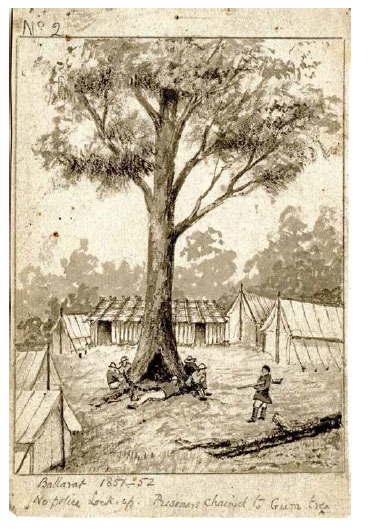
Police Camp Ballarat 1852
pen and ink
17 x 13cm
Royal Historical Society
of Victoria, Melbourne
The location of Ballarat’s original
Police Camp and Camp Tree has
been much debated. The tree was
used by police to secure prisoners,
including unlicensed diggers,
before lockup facilities were built,
and it became a symbol of the
harsh licensing laws that played a
significant part in the conditions
that led to the Eureka Stockade
of 1854. This image by Meek
was drawn in 1852 before the
Government Camp moved to a new
site in present-day Camp Street.

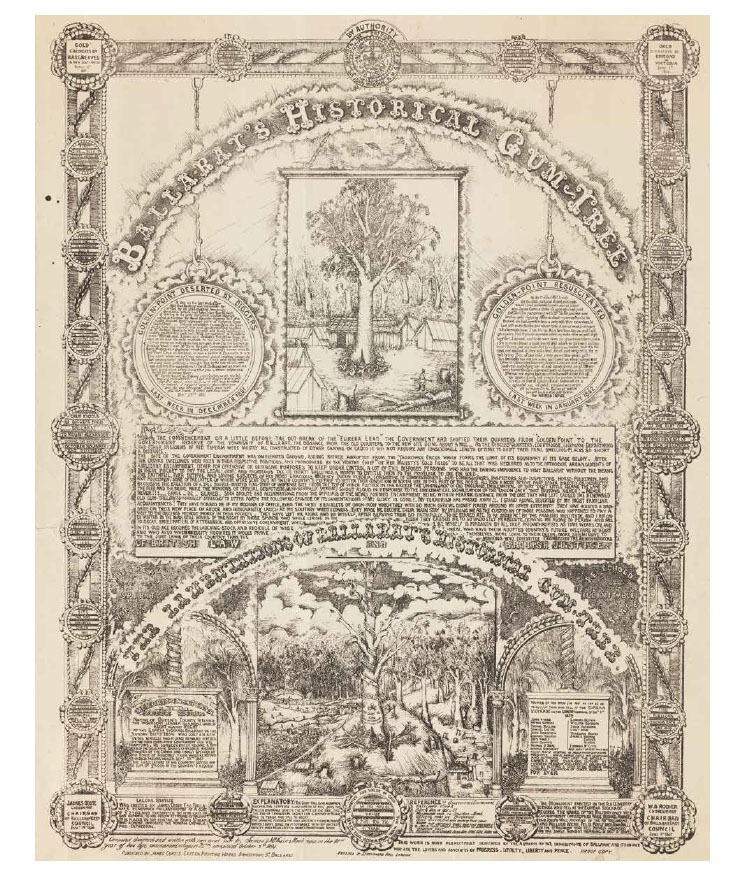
Ballarat’s Historical Gum~Tree

Beauties of Shakespeare

Beauties of Shakespeare

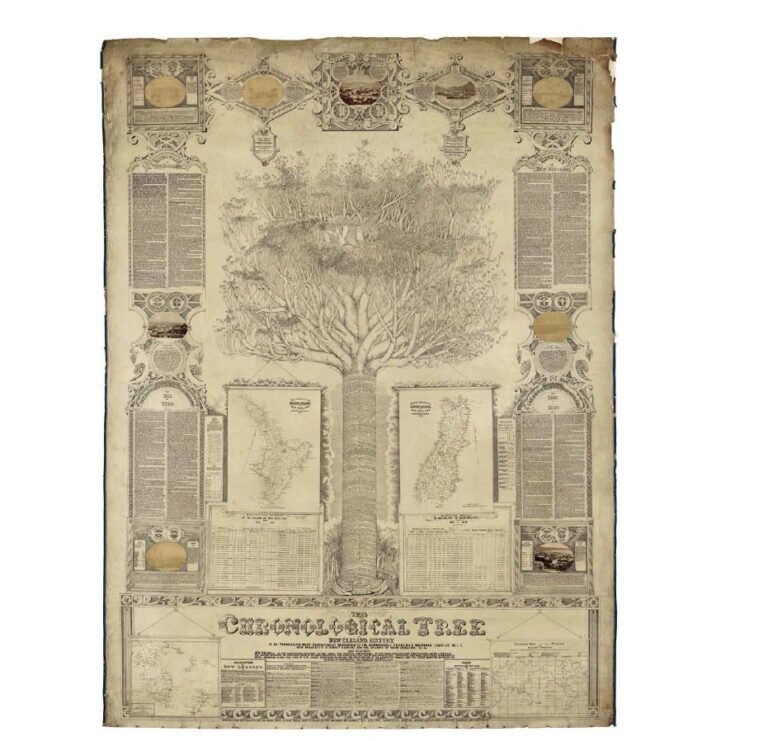
Chronological Tree of New Zealand History

Chronological Tree of New Zealand History

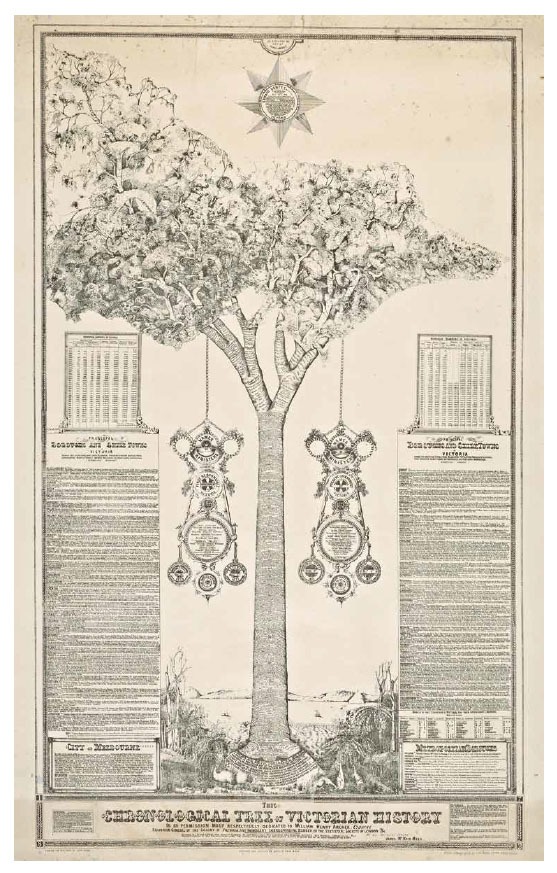
Chronological Tree of Victorian History

Chronological Tree of Victorian History

James McKain Meek
James Curtis, Caxton Printing
Works, Ballarat (printer)
Ballarat’s Historical Gum~Tree
(proof copy), 1895
photolithograph
61.7 x 48.7cm
Art Gallery of Ballarat
Gift of Austin McCallum, 1979
Described by historian James Flett
as ‘a very strange picture … called
an ‘Historical Tree’,10 this work is
quintessentially Meek. It teems
with historical and statistical data
and features an eccentric text about
incidents on the Ballarat diggings.
Meek’s version of early events is
not always shared by historians and
some of his claims are contested.

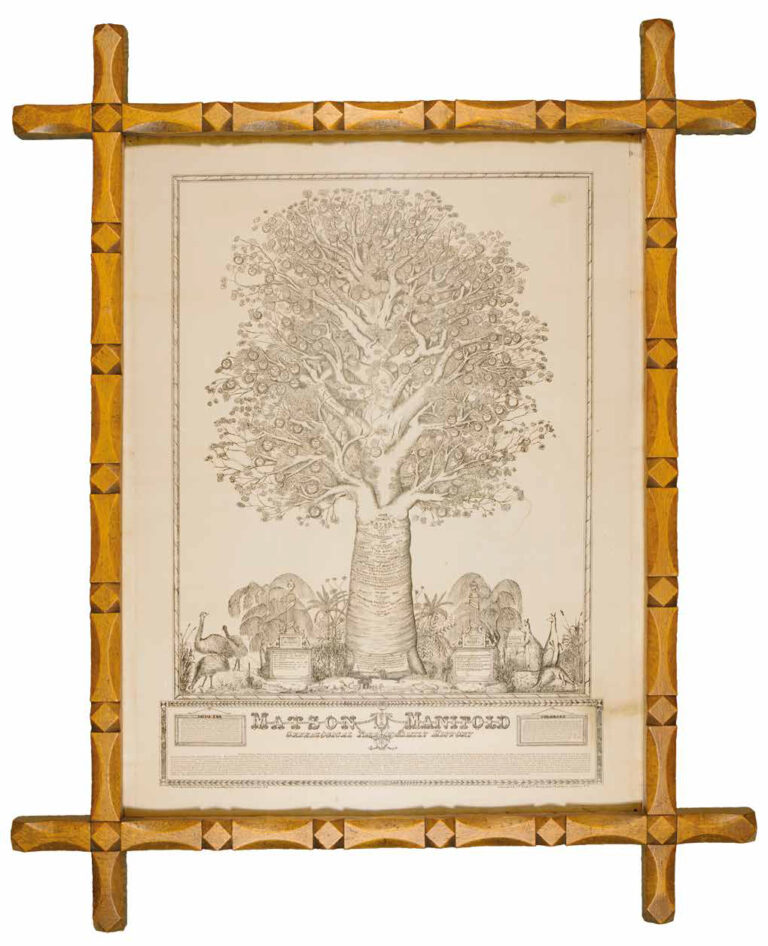
Matson Manifold Genealogical Tree of Family History

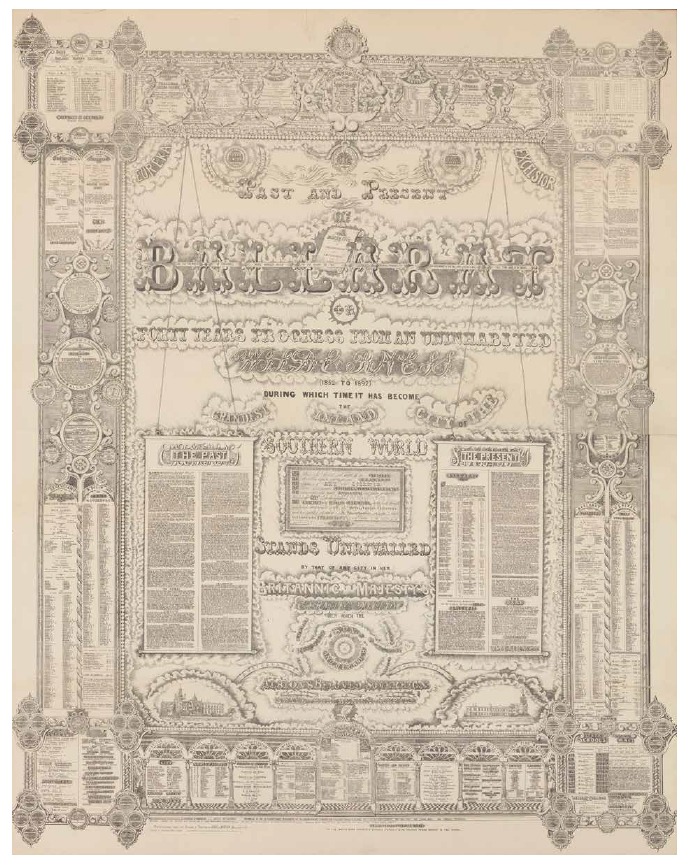
Past and Present of Ballarat

Past and Present of Ballarat

James McKain Meek
Police Camp Ballarat 1852
pen and ink
17 x 13cm
Royal Historical Society
of Victoria, Melbourne
The location of Ballarat’s original
Police Camp and Camp Tree has
been much debated. The tree was
used by police to secure prisoners,
including unlicensed diggers,
before lockup facilities were built,
and it became a symbol of the
harsh licensing laws that played a
significant part in the conditions
that led to the Eureka Stockade
of 1854. This image by Meek
was drawn in 1852 before the
Government Camp moved to a new
site in present-day Camp Street.

Police Camp Ballarat

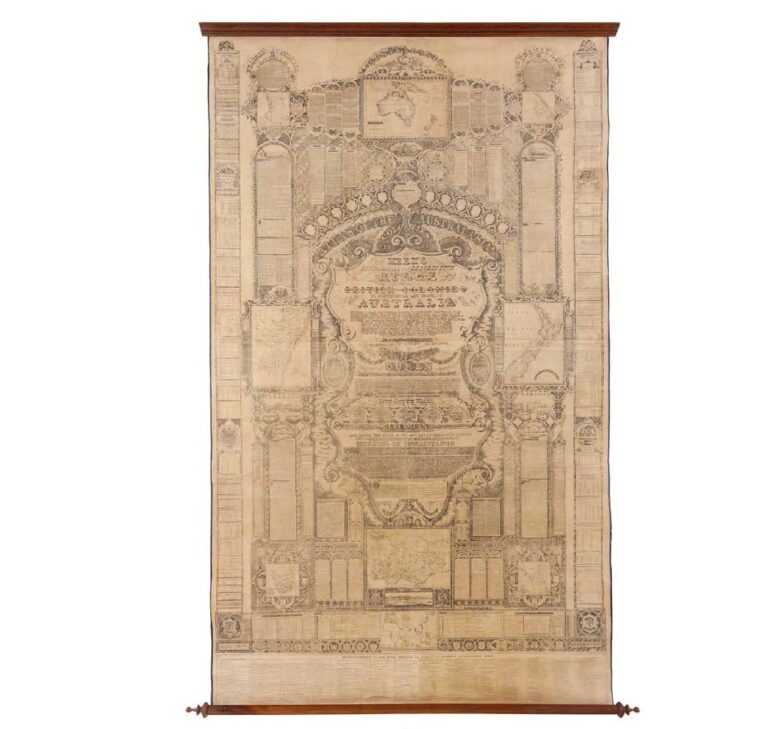
The Atlas of the Australasian Colonies

The Atlas of the Australasian Colonies

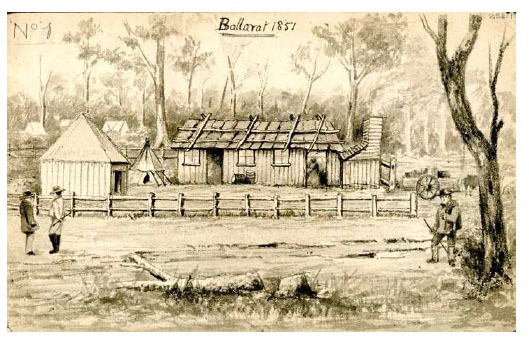
The First House in Ballarat 1852
pen and ink
14 x 22cm
Royal Historical Society of Victoria, Melbourne
Note: Meek identified the date of the house
and drawing as 1852. An incorrect date has
been added to the work.
Meek’s sketches are among the
earliest made on the goldfields and
only two survive. This 1852 drawing
of the first house in Ballarat depicted
his own dwelling. Over the years he
repeated the image, out of nostalgia
for the early days, and to proclaim
his part in the city’s beginnings.
Forty years later he reworked this
subject for a commission in oils
by young artist George Grant. His
other surviving sketch from 1852 is
of Ballarat’s Police Camp on p.15.

The First House in Ballarat